Loading…
 Indianapolis Colts
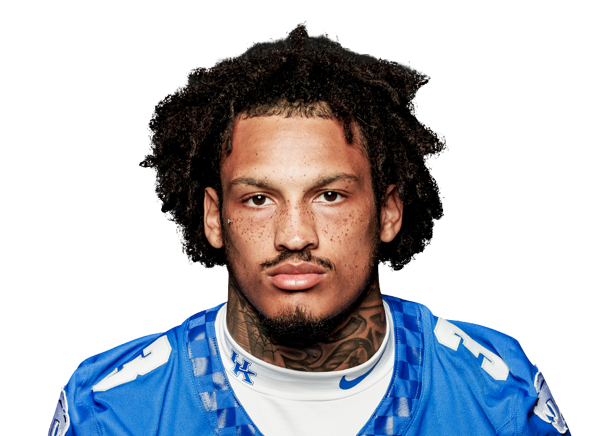
Seth McGowan
#20 · RB · 6' 0" · 223 lb · 6 games
Stats updated: Nov 1, 2026 — nightly box scores, not live.
- Draft
- Undrafted
- College
- Kentucky
- Experience
- Rookie
Line
Rushing Yards · season avg 27.2 RUSH YDS · PrizePicks lineSave this PrizePicks prop to your Playbook to track it
PrizePicks payout options — Rushing Yards (RUSH YDS)
Pick any line — standard, demon (harder, pays more), goblin (easier, pays less), or an alternate with its payout multiplier — and the whole read updates to it. Only the standard line takes an under; every other variant pays the over only. Each rung’s FireFactor is scored against its OWN payout breakeven — 0 means fairly priced for that payout, not a coin flip — so rungs compare directly. The bar uses the best information available: an exact posted multiplier, else the market’s de-vigged sportsbook odds at that exact line, else a published-payout approximation.
How PrizePicks payouts work with demons & goblins
Typical entry payouts (verify in the app — they change and can vary by state): Power Play 2-pick 3×, 3-pick 5×, 4-pick 10×. Flex Play 3-pick 2.25× (1.25× one miss), 4-pick 5× (1.5× one miss), 5-pick 10× (2× / 0.4× on misses), 6-pick 25× (2× / 0.4× on misses).
Demons: Adding a demon raises the whole entry’s payout multiple (a harder line buys a bigger multiplier). Demons can only be taken as More.
Goblins: Adding a goblin lowers the whole entry’s payout multiple (an easier line costs payout). Goblins can only be taken as More and aren’t combinable with everything — the app shows the exact adjusted payout.
OutOutSeth McGowan isn't expected to play — the read below describes past games only.
McGowan's best run was a 16-yarder up the middle midway through the third quarter to take the ball to Jacksonville's three-yard line. That set up Indianapolis' only touchdown in the blowout loss. McGowan logged a modest 15 offensive snaps to starter Jonathan Taylor's 38, but the former outgained Taylor on the ground, 29-23. Meanwhile, DJ Giddens paced the Colts with 43 rushing yards on six totes. The big story, of course, is that the Colts are entertaining trade offers on Taylor, and if the star RB is ultimately dealt, McGowan and Giddens both figure to take on significantly larger roles, though it's unclear which of the two would become the starter. With that in mind, it's worth noting that Giddens didn't enter until the fourth quarter and racked up all of his yardage in garbage time.
Verdict
vs 23.5 RUSH YDSRushing YardsNo readFireFactor 0/100· model 75% over
Hit rate (confidence-adjusted)100supports it
Projection vs line75supports it
Consistency35argues against it
Matchup50neutral
Projection
30.8 RUSH YDS(×1.07 context)
L5 29.8 · L10 27.2 · med 28.0
Consistency
Variable
floor 16.0 · ceil 31.0
Matchup
C
defense vs role
Player is Out — no read on this line.Small samples and hot streaks are discounted by a 95% Wilson lower bound (the trust factor), so a thin streak can’t masquerade as an edge.
Book links are referral links — we may earn a commission. It never affects the numbers on this page.
Last 55 games
80%over
4 over · 1 under
Low confidence95% CI 38%–96%Last 106 games
67%over
4 over · 2 under
Low confidence95% CI 30%–90%Last 206 games
67%over
4 over · 2 under
Low confidence95% CI 30%–90%Season6 games
67%over
4 over · 2 under
Low confidence95% CI 30%–90%Situational splits
Over 23.5 RUSH YDS by situation, each with its own confidence — thin splits read Low, so a small-sample “crushes at home” doesn’t masquerade as an edge.
Home / Away
Home50%1/2Low
Away75%3/4Low
Days since last game
3+ days80%4/5Low
 Next matchup — vs DAL
Nov 8, 2026
17thof 32 in RUSH YDS allowed to running backs
DAL allows 45.6 RUSH YDS per game to running backs (rank 1 = allows the most).
Sample: 20 player-games
NeutralThe read
Over his last 6 games, Seth McGowan has gone over 23.5 RUSH YDS 4 of 6 decided times (67%) — versus 67% across the full season. DAL has been a middling matchup for running backs this season, allowing the 17th-most RUSH YDS of 32 teams (45.6 per game). His game-to-game RUSH YDS have been moderately variable (σ ≈ 10.6), so short streaks can mislead. These are descriptive stats about past games, not predictions or betting advice.
Market edgeauto
2 books @ 25.5 RUSH YDS- No-vig fair (over)
- 49.8%
- No-vig fair (under)
- 50.2%
Best Over
Hard Rock Bet-110
-4.9% EV
Best Under
DraftKings-109
-3.8% EV
Model vs market (over)+25.0%
Our model puts the over at 74.8% vs the market's no-vig 49.8%. A comparison of two numbers — not a guarantee.
Line shopping — Rushing Yards (RUSH YDS)
Each book’s line and your season over rate at that number, vs the market consensus (25 RUSH YDS). A softer number you’d clear more often is a discount — the best one lifts the FireFactor read. Click a book to switch the whole read to it.
over rate = season hit rate at that line. Edge = points of hit rate vs the consensus line. Descriptive research from past games — not betting advice.
Fair-price calculator
Enter the book's American odds to see implied probability, the no-vig fair price, and the edge vs. this player's season hit rate.
Edge vs
Hit rate excludes pushes from the denominator. Confidence uses a 95% Wilson interval — a high recent rate on few games still reads as low confidence. Season over rate at this line: 67%.